
 ← Focus & Calm
 Visual Routines and Calm Transitions for Young Kids
A practical pillar guide to visual routines for kids transitions: mornings, bath time, waiting, and bedtime, with simple steps any family can try today.
Bath water is running, dinner is half-cooked, and a small person is melting down because it is time to put on pajamas. Sound familiar? Transitions are one of the hardest parts of the day for young kids — and honestly, for the grown-ups too. The good news is that a simple visual cue can do what ten reminders cannot.
This is a pillar guide on visual routines for kids transitions. We will walk through why they work, how to build one, and how to use them across mornings, bath time, waiting moments, and bedtime. No fancy tools required.
Why visual routines work
Little kids live in a world where adults constantly tell them what is next. That is exhausting for them. Their sense of time is fuzzy, and verbal instructions disappear the second we say them.
A picture stays. A picture they can point to, touch, or check off feels like something they own. That tiny shift — from being told to being in charge — is what makes transitions calmer.
A visual routine helps kids:
- Predict what is coming next, which lowers anxiety
- See progress, which builds confidence
- Move on their own without constant nagging
- Feel respected, because they are part of the plan
This is not about strict scheduling. It is about giving kids a friendly map of their day.
How to build a simple visual routine
You do not need a laminator or a fancy app. The simpler, the better. Here is the approach we have used at home:
- Pick one tricky moment first. Mornings, bedtime, leaving the park — start where the friction is biggest.
- Break it into 4 to 6 steps. Any more and it becomes overwhelming.
- Draw or print small pictures. Stick figures are perfect. Let your kid help draw them.
- Put them in order on a wall, fridge, or small board. Eye level for the kid, not for you.
- Use it together for a week before changing anything.
Let your kid color the icons themselves. When kids decorate their own routine, they take ownership of it. That is also why coloring fits so naturally into this — it is a low-stakes way to make the chart feel like theirs.
Mornings without the rush
Mornings are usually the loudest transition of the day. A visual chart can include: wake up, bathroom, get dressed, breakfast, brush teeth, shoes on. That is it.
A few small tips that helped our family:
- Lay out clothes the night before so the icon means something concrete
- Let kids check off or flip each card as they finish
- Skip the running commentary — point to the chart instead of repeating yourself
If a step gets stuck, that is information. Maybe breakfast is too rushed, or shoes are hard to put on. The chart shows you the bottleneck.
Bath time and bedtime
Bedtime resistance is rarely about bedtime itself. It is about the transition from a fun, bright, stimulating world into a quieter one. A visual sequence helps soften that drop: bath, pajamas, story, hugs, lights low.
This is also a great moment for a calm coloring page. A few minutes of slow, simple coloring after the bath helps kids downshift before stories. We talk about this more in our bedtime and emotions guides linked below.
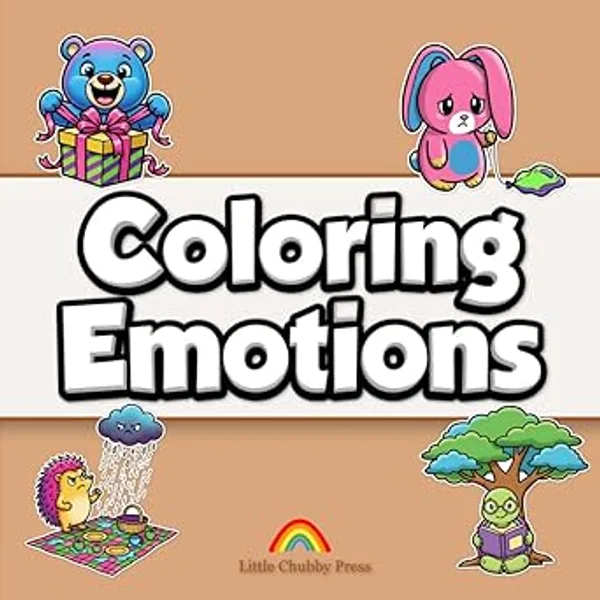
For families navigating big feelings around routines, our Coloring Emotions book is a gentle companion. The pages are simple on purpose — kids can color a happy face, a worried face, a calm face — and use them to talk about what they are feeling during transitions. It pairs naturally with a visual routine because both tools give kids a way to see their inner world, not just hear about it.
Waiting moments and tricky transitions
Waiting rooms, restaurant tables, sibling pickup, the long stretch before dinner — these are micro-transitions that pile up. A tiny portable visual can help: three things we will do while we wait, in order.
Ideas that work:
- A small zip pouch with a coloring book, a few crayons, and a tiny figurine
- A “wait card” with three icons: color, snack, hug
- A sand timer so time becomes visible, not abstract
Waiting feels shorter when there is a plan. It does not have to be exciting — just predictable.
When the routine stops working
Every routine eventually stops working. Kids grow, seasons change, a new sibling arrives. That is normal.
When things start unraveling:
- Sit with your kid and review the chart together
- Ask which step feels boring or hard
- Redraw it together, even if only one icon changes
The goal is not a perfect chart. It is a calmer house and a kid who feels like a partner in their own day.
Your next step
Pick the one transition that drives you a little crazy this week, and build a tiny visual for it tonight. Five icons, scribbled on paper, taped to the wall. Try it for seven days before judging. You will probably be surprised how much shouting disappears when there is a picture doing the talking.
Keep exploring
- The Complete Guide to Calm Coloring for Big Feelings — pairs perfectly with visual routines for emotional transitions.
- How Coloring Supports Early Learning and Fine Motor Skills — the developmental side of why these tools work.
- The Complete Screen-Free Activity Guide for Busy Families — more low-pressure ideas to fill those tricky in-between moments.
More articles

The Complete Guide to Calm Coloring for Big Feelings
A gentle, practical guide to using calm coloring for kids emotions — for tantrums, anxiety, transitions, and the everyday big feelings.

What to Do When a 3-Year-Old Melts Down in a Grocery Store
A real-parent guide to handling a 3 year old meltdown grocery store moment with calm, dignity, and a tiny portable kit that actually helps.

Coloring Activities That Actually Work for Kids With ADHD
Practical, low-pressure coloring ideas that help kids with ADHD focus, regulate, and feel proud of what they create.