
 ← Focus & Calm
 The Complete Guide to Calm Coloring for Big Feelings
A gentle, practical guide to using calm coloring for kids emotions — for tantrums, anxiety, transitions, and the everyday big feelings.
The meltdown started over a sock. Not a missing sock, not a wet sock — just a sock that suddenly felt wrong. If you have lived through one of these moments, you know that logic does not help. Hugs sometimes help. Snacks sometimes help. And surprisingly often, a blank coloring page and a small box of crayons can help too.
This is a guide for parents who want a simple, low-pressure tool for big feelings. No special training, no fancy supplies. Just paper, color, and a few small shifts in how we offer it.
Why coloring soothes big feelings
When kids feel overwhelmed, their thinking brain goes a little offline. They are not being difficult on purpose — their bodies are flooded. Coloring works because it gives them something gentle to do while that flood passes.
A few reasons it helps:
- Repetitive motion is regulating. Filling in a shape with small back-and-forth strokes is similar to rocking, swinging, or squeezing — soothing rhythms the body already knows.
- It is low stakes. There is no right answer. A purple sky is fine. A green elephant is fine. That permission alone lowers pressure.
- It moves attention outward. Big feelings live inside the body. Coloring gives the eyes and hands somewhere safe to go.
- It is quiet. No talking required. For many kids, that is exactly what they need before they can use words again.
This is the heart of calm coloring for kids emotions: not solving the feeling, just giving it somewhere to land.
When to reach for the crayons
Coloring is not a magic switch, but it is a useful tool in many everyday moments:
- Tantrum aftermath. Once the biggest wave has passed and your kid is exhausted, a quiet coloring page can help the body settle the rest of the way.
- Anxious mornings. Before school, before a doctor visit, before a new activity. Five minutes of coloring at the table can take the edge off.
- Transitions. Coming home from a busy day, switching from play to dinner, winding down before bed. Coloring is a soft bridge between two energies.
- Long waits. Airports, restaurants, waiting rooms. The kind of places where boredom and big feelings tend to collide.
- After hard conversations. Sometimes a kid wants to keep their hands busy while they process what was said. Coloring lets them do that without eye contact.
You do not need to wait for a crisis. Pulling out a page during a calm moment teaches kids that coloring is something they can return to later, on purpose.
How to set it up without pressure
A few small choices make a big difference:
- Sit nearby, not over them. Color your own page if you can. Side by side feels safer than face to face when feelings are tender.
- Skip the questions. Avoid “How do you feel?” right at the start. Let the coloring do the work. Conversation often comes later, on its own.
- Let go of the rules. Outside the lines is fine. Skipping pages is fine. Scribbling over a page is also fine — sometimes that is exactly what a kid needs.
- Keep the supplies easy. A small basket with one book and a handful of crayons beats a giant art bin. Less choice means less overwhelm.
- Name the calm, gently. Something like “My shoulders feel softer now” models what is happening without putting it on them.
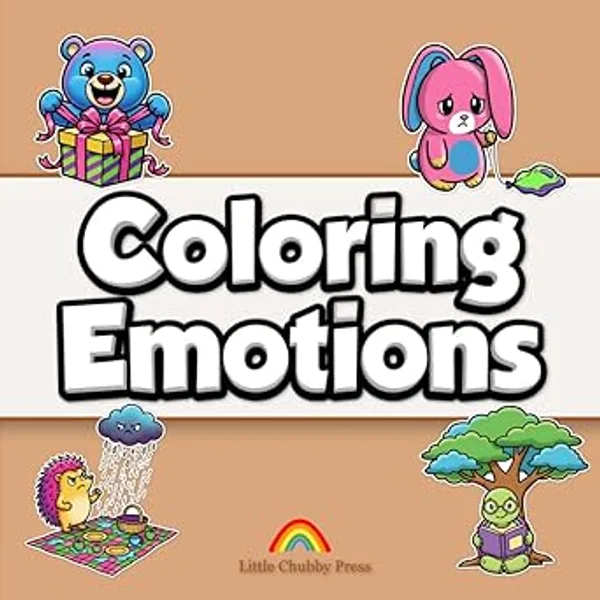
This is also where our book Coloring Emotions can be a quiet helper. The pages are designed around feelings kids actually have — big, small, and in between — so children have a safe visual to color while they sort things out inside. It is not a workbook, just a friendly invitation.
Gentle prompts for different feelings
If your kid is open to a little structure, you can try soft prompts like:
- “Pick a color that feels like how you are right now.”
- “What color does calm look like today?”
- “Color this page in any way that feels good.”
- “You can press hard or soft — whatever your hand wants.”
For anger, pressing hard with a dark crayon can be a real release. For sadness, slow soft strokes often feel right. For worry, repetitive patterns — dots, lines, small shapes — can be very settling. There is no wrong answer.
Building a long-term habit
The goal is not to color every time a feeling appears. The goal is for your kid to know, somewhere in their body, that this tool exists.
A few ways to build that:
- Keep a coloring book in the same easy-to-reach spot.
- Color together sometimes when nothing is wrong, so it is not only a “sad day” activity.
- Notice out loud when it helps: “That was a rough morning, and coloring really helped us land.”
- Let your kid choose when to use it. Ownership matters.
Over time, many kids start reaching for the crayons on their own. That is the quiet win.
Your next step
If today felt loud, try this tonight: pull out one coloring book, set it on the table with a few crayons, and sit down to color a page yourself. Do not announce it. Do not invite. Just color. Most kids will wander over within a few minutes, and the day will feel a little softer for everyone. That is enough. That is the whole practice. 🐘
Keep exploring
- Why Coloring Is a Lifesaver for Kids Who Struggle With Transitions — a practical bridge for the moments when switching activities feels too big.
- Why Coloring Helps Kids Relax Before Bedtime — a calmer way to turn evening energy into a softer landing.
- Coloring Activities for Kids With ADHD — gentle, low-pressure ideas for focus, movement, and emotional regulation.
More articles

What to Do When a 3-Year-Old Melts Down in a Grocery Store
A real-parent guide to handling a 3 year old meltdown grocery store moment with calm, dignity, and a tiny portable kit that actually helps.

Visual Routines and Calm Transitions for Young Kids
A practical pillar guide to visual routines for kids transitions: mornings, bath time, waiting, and bedtime, with simple steps any family can try today.

How Coloring Quietly Builds Patience in Toddlers
Toddlers are not born patient — they grow into it. Here is how a few crayons and a quiet moment can teach more than you would expect.